Why Fragmented Messages Cost Your AI Bot 3x More
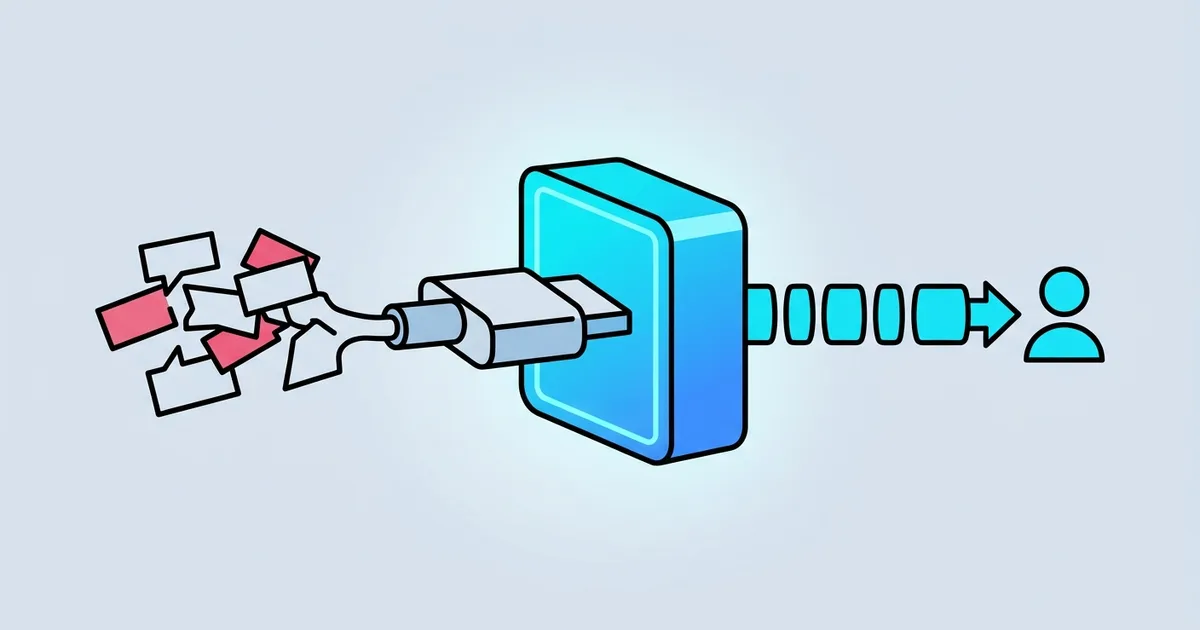
One intent, four messages, four bills — unless you merge them.
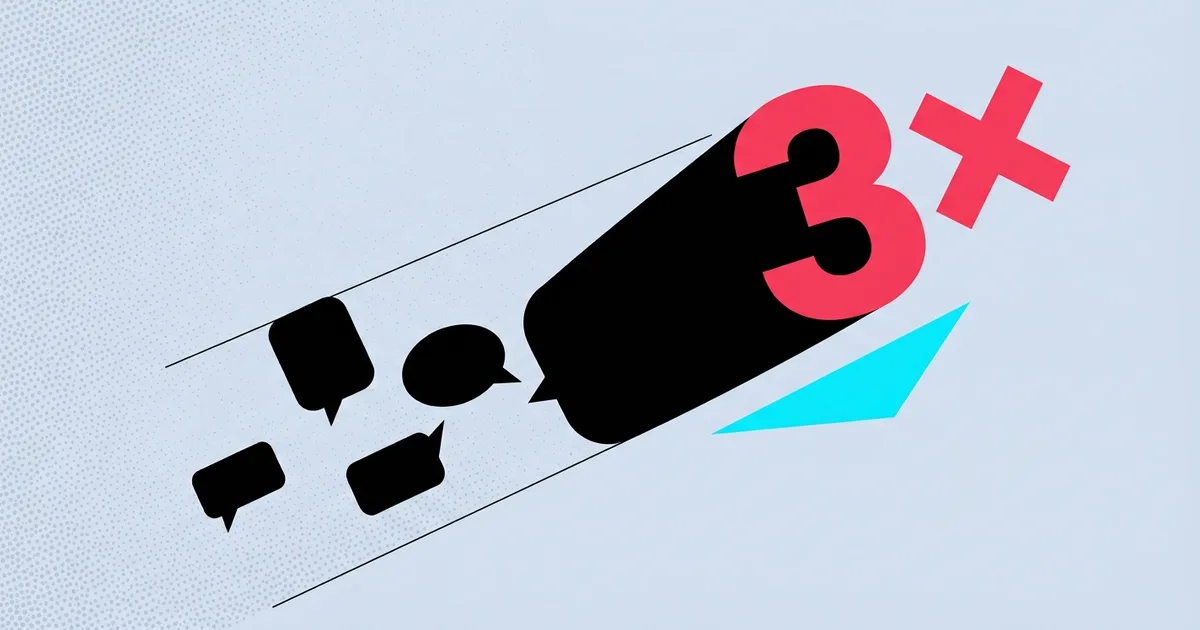
- One intent arrives as 4–5 fragments on messaging channels — the default, not the edge case.
- That costs about 3×: extra runs, redundant tokens, re-read context.
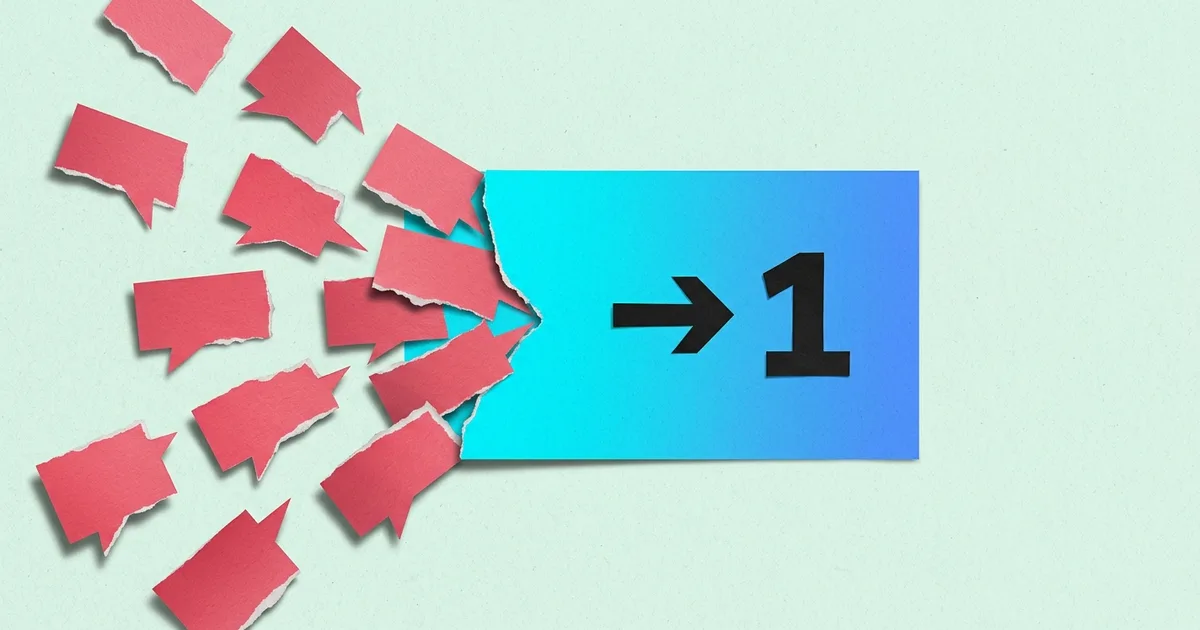
- Consolidation collapses the burst to 1 run per intent.
The problem
- People chat in bursts — "hi", "wait", "actually", "help me" — one intent across four messages.
- Each fragment is a separate webhook, so your bot runs 4–5 times for one question.
- You pay the platform, the tokens, and the re-read context on every fragment — about 3×.
The solution
Collect messages from the same sender inside a short debounce window, stitch them in order, and release one complete payload to the bot.
- Buffer messages from one sender for a few seconds of quiet.
- Merge them in order into one message.
- Release one payload — one execution, one model call, one coherent answer.
The window is the whole trick: long enough to catch the burst, short enough that no one feels a delay.
Result: one intent → one run, and the bot finally sees the whole question.
“hi” — “wait” — “actually” — “help me with my order.” Four messages, one intent, and if your AI bot is webhook-driven, four to five executions billed for a single question. Fragmentation is how people actually chat, and it’s quietly one of the most expensive patterns in production. Here is the math, and the two ways to fix it.
How humans really send messages
Nobody types one clean paragraph in a chat. They greet, they hesitate, they correct themselves, and then they get to the point — across several separate messages sent seconds apart. In a chat UI that reads as one conversation. To your bot, it’s four webhooks. This isn’t an edge case; on messaging channels it’s the default behavior.
The math behind 3x
Take one real intent split across four fragments. Here’s what each layer charges for.
| Layer | Charged per | Fragmented (4 msgs) | Consolidated (1 msg) |
|---|---|---|---|
| Automation platform | execution / operation | 4–5 runs | 1 run |
| LLM | tokens + call overhead | 4–5 partial calls | 1 full call |
| Wasted context | re-reading history | each run re-reads | read once |
The platform bills every trigger. The model bills every call, and each partial call re-reads the conversation history to make sense of a fragment — so you pay for the same context repeatedly. Stack the three and a fragmented conversation lands around three times the cost of the same intent sent once. And cost is only half the damage: when the bot runs on “hi” it answers “hi”, a useless reply, and seeing fragments it often guesses at an intent that isn’t complete yet. You pay more and the experience is worse.
The manual fix (Option 1)
Consolidation itself is simple to describe and surprisingly hard to build well, because it’s stateful: you have to hold messages and release them later.
Fix 1: buffer per sender
Hold incoming messages keyed by sender in a short-lived store, and don’t forward until the burst looks finished. That means somewhere to keep partial state and a timer per conversation — not a stateless webhook handler anymore.
On a gateway, the per-sender buffer is built in.
Fix 2: tune the debounce window
A few seconds of quiet usually signals the person has finished their thought.
On a gateway, the window is a setting you pick, not a timer you manage.
Fix 3: merge in order
Fragments must be stitched back in the order they were sent, or the merged message reads as nonsense. The mechanism — collecting a burst inside a window and emitting exactly one call — is detailed in message unification: turning a burst into one LLM call.
On a gateway, ordering and merging are handled for you.
The catch: stateful code in a stateless pipeline
Buffering turns a simple webhook handler into a stateful service: a store to hold partial bursts, a timer per sender, ordering logic, and cleanup when someone walks away mid-thought. You build it once, then repeat it on every channel and keep it correct under load. For one bot it’s doable; across a fleet it’s a real system to own.
Place a gateway layer (Option 2) — faster
A message gateway buffers the burst, merges it in order, and forwards one payload — before the bot, with no change to your bot logic.
- No stateful code in your bot. The gateway holds the burst; your handler stays stateless.
- One layer, every channel. The same buffering covers WhatsApp, Slack and the rest.
- Tune, don’t code. The debounce window is a setting.
- Pairs with dedup. A burst that also arrives twice needs both fixes — see how to stop duplicate messages.
Option 1 (DIY) vs Option 2 (gateway)
Neither is wrong — one trades time for control, the other control for time:
| Do it yourself | Use a gateway | |
|---|---|---|
| Per-sender buffer | ✕You build & host state | ✓Built in |
| Debounce window | ~Timer per conversation | ✓Just a setting |
| Ordering & merge | ~Yours to get right | ✓Handled for you |
| Bot stays stateless | ✕Now a stateful service | ✓Unchanged |
| Every channel | ~Repeat setup each time | ✓One layer, all channels |
| Control of internals | ✓Full | ~Abstracted away |
If option 2 sounds more like you, here’s the short version of how to set it up: merge the burst before your bot sees it →.
Either way — go make your bot run once per intent.
Thanks for reading. 👋
Orlando. -
Orlando Quijada
Technologist with 15+ years of experience. Developer, SaaS tester, and AI collaboration & optimization specialist. Currently contributing at portarus.com.
Written on