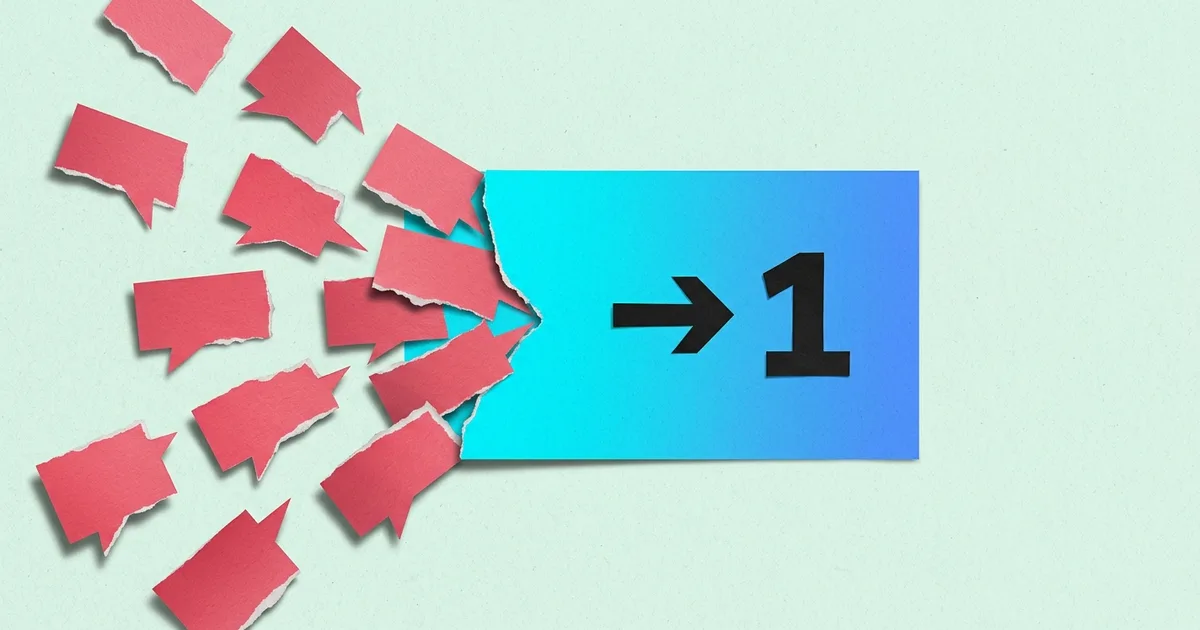
What Is a Message Gateway for AI Agents?
Message-level judgment, applied before the model call.
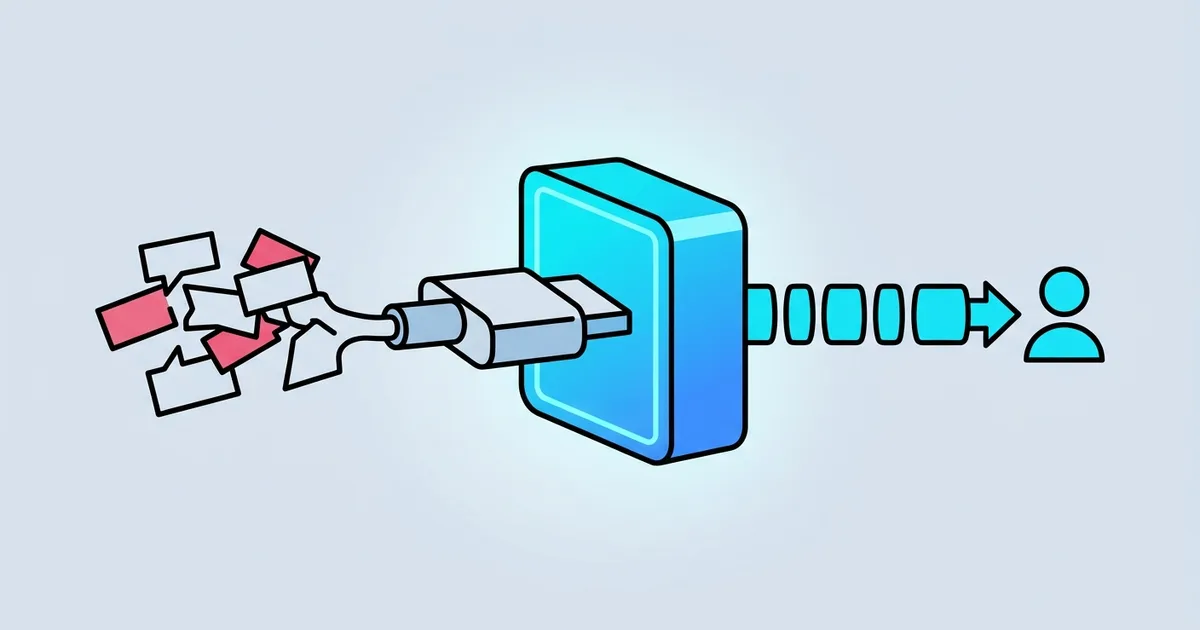
- A firewall, proxy and API gateway never look inside the message.
- A message gateway asks one question: is this worth running?
- Adoption is one URL change — no agent rewrite, every channel covered.
The problem
- Your agent runs the model on whatever lands — duplicates, fragments, floods, abuse.
- A firewall, proxy or API gateway never looks inside the message to catch any of it.
- So the input-layer work ends up inside the agent, repeated in every integration.
The solution
A message gateway sits between your channels and your agent and cleans the stream before the model:
- Deduplicate repeats, consolidate bursts into one call.
- Budget tokens on oversized payloads, rate-limit floods and abuse.
- Adopt it with one URL change — no agent rewrite, no per-integration code.
It reasons about message content, not packets or routes — the one thing a firewall or API gateway can't.
Result: every channel is deduplicated, budgeted and rate-limited in one place.
A message gateway for AI agents is a layer that sits between your channels and your agent and cleans the message stream before it reaches the model. It deduplicates, consolidates, budgets tokens, and rate-limits — the input-layer work your agent should never be doing itself. If that sounds like a firewall or an API gateway, it’s not, and the difference is the whole point.
What a message gateway does
A message gateway applies message-level intelligence. It doesn’t just forward traffic — it understands each payload well enough to decide whether it’s worth running:
- Deduplication — drops the same message when it arrives more than once.
- Consolidation — merges a burst of fragments from one sender into a single call.
- Token budgeting — caps oversized payloads before they hit the model.
- Rate limiting — throttles floods and abuse to a survivable rate.
Everything that survives is a clean, single, correctly-sized message. Everything else is stopped before it costs you an execution or a model call.
What it is not
The word “gateway” is overloaded, so it’s worth being precise about what a message gateway is not.
| Layer | Operates on | Question it answers |
|---|---|---|
| Firewall | Packets / IPs | Is this traffic allowed in? |
| Proxy | Connections | Where do I forward this? |
| API gateway | HTTP routes | Auth, routing, rate limits per endpoint |
| Message gateway | Message content | Is this message worth running? |
A firewall reasons about packets and addresses. A proxy forwards connections. An API gateway handles routing, authentication, and coarse rate limits at the HTTP layer. None of them look inside the message to notice that it’s a duplicate, a fragment of a larger intent, or a 50,000-token flood. A message gateway does exactly that.
The “one URL change” pattern
The reason a message gateway is practical is that adopting it costs one line of configuration. Your channels already send messages to a webhook URL. You change that URL to point at the gateway, and the gateway forwards clean messages to your original endpoint.
Before:  WhatsApp / Slack / webhook  →  your AI agent
After:   WhatsApp / Slack / webhook  →  message gateway  →  your AI agent
No rewrite of your agent, no per-integration code. One URL, and every channel is suddenly deduplicated, consolidated, budgeted, and rate-limited in one place.
Why not build it into the agent?
You can put each of these checks inside your workflow — but then the logic lives in every integration you own, and you maintain it in each one as platforms change. Centralizing it in a gateway means the input layer is fixed once and applies everywhere. Whether to build it yourself or use a managed layer is a real decision — see custom middleware vs a message gateway — and the individual mechanics are worth understanding first: how to stop duplicate messages and rate limiting AI agents each go deep on one piece.
Where it fits in your stack
A message gateway is complementary to the layers you already have, not a replacement. Keep your firewall and your API gateway; they do their jobs. The message gateway adds the one thing they cannot: judgment about the content of each message, applied before your expensive model call. The full picture is in the complete guide to message quality for AI agents.
Adopting it is one URL change: point your webhook at a message gateway and your agent stops paying for garbage. Here’s the short version of how: point one webhook at the gateway →.
Go give your agent an input layer it was never meant to build itself.
Thanks for reading. 👋
Orlando. -
Orlando Quijada
Technologist with 15+ years of experience. Developer, SaaS tester, and AI collaboration & optimization specialist. Currently contributing at portarus.com.
Written on