How to Optimize Make.com AI Webhooks
Optimize the webhook before it fires, not after.
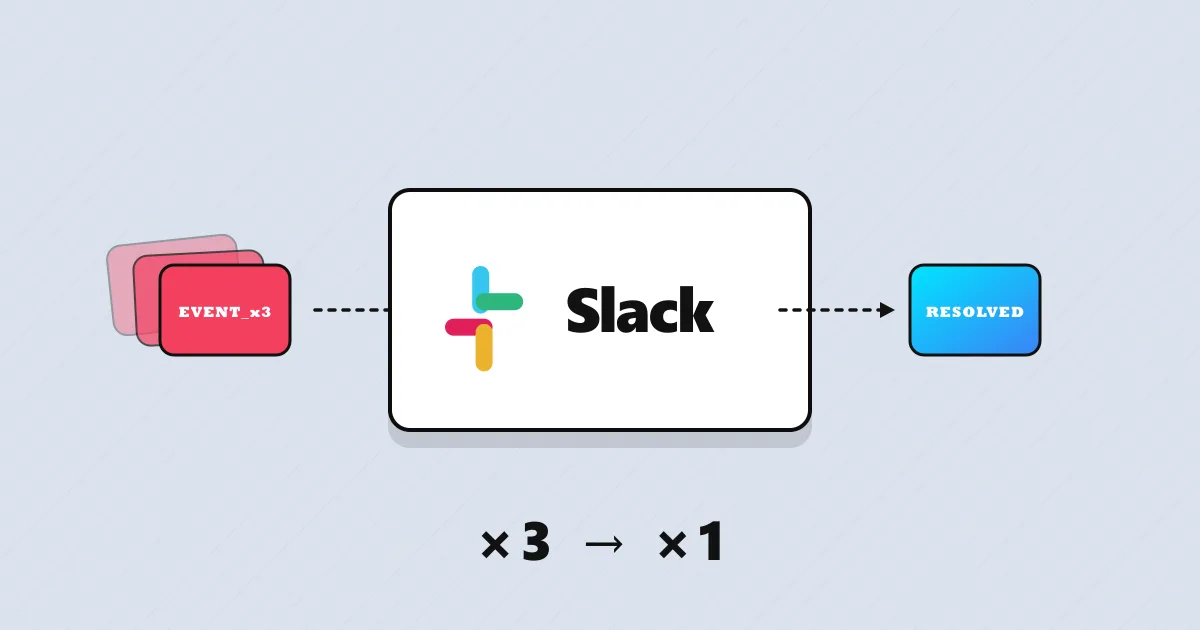
- One duplicate runs the whole chain — trigger, router, AI call, response.
- At 10k runs/mo × 4 modules, 45% junk wastes ~18,000 operations.
- Filtering in front saves a 33% bigger cut than inside — the trigger is included.
The problem
- In Make the price is the operation, not the message — every module in the path bills.
- A duplicate or fragmented webhook runs the whole chain: trigger, router, AI call, response.
- The trigger operation is counted the moment the webhook fires — before any filter.
The solution
You can cut waste in two places, and the gap between them is exactly the trigger operation:
- Inside the scenario: a filter after the webhook skips the AI call, but the trigger already billed.
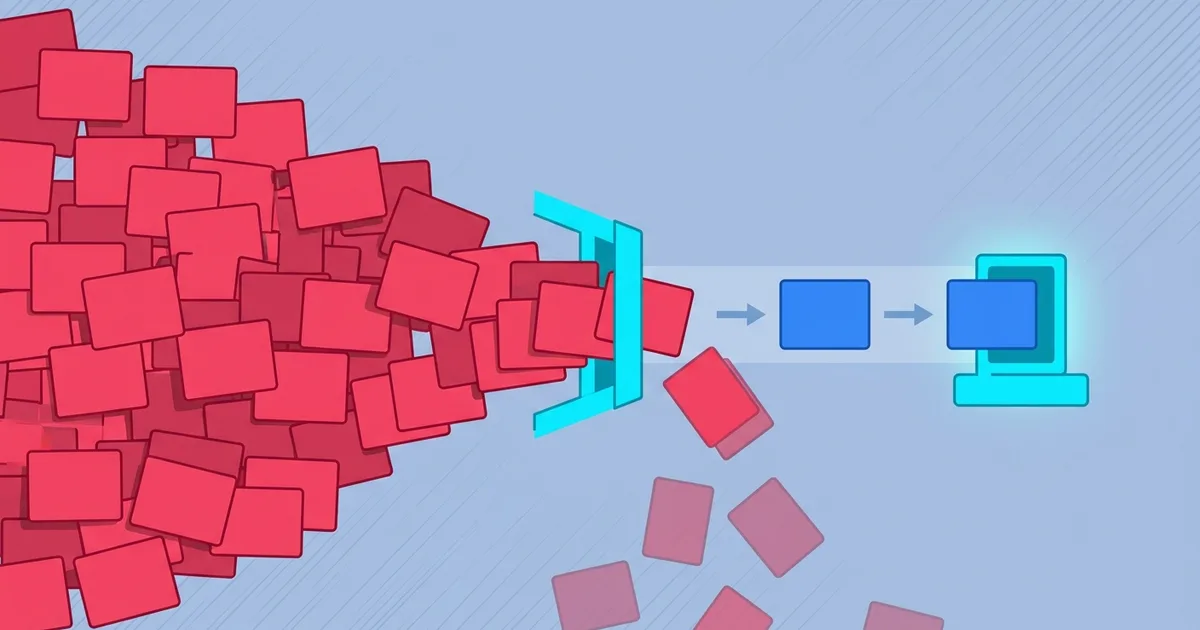
- In front of Make: the junk never reaches it, so the scenario never runs.
Deduplicate retries and merge fragmented bursts into one clean payload per intent.
Result: the scenario fires once per real intent — no wasted trigger, no wasted modules.
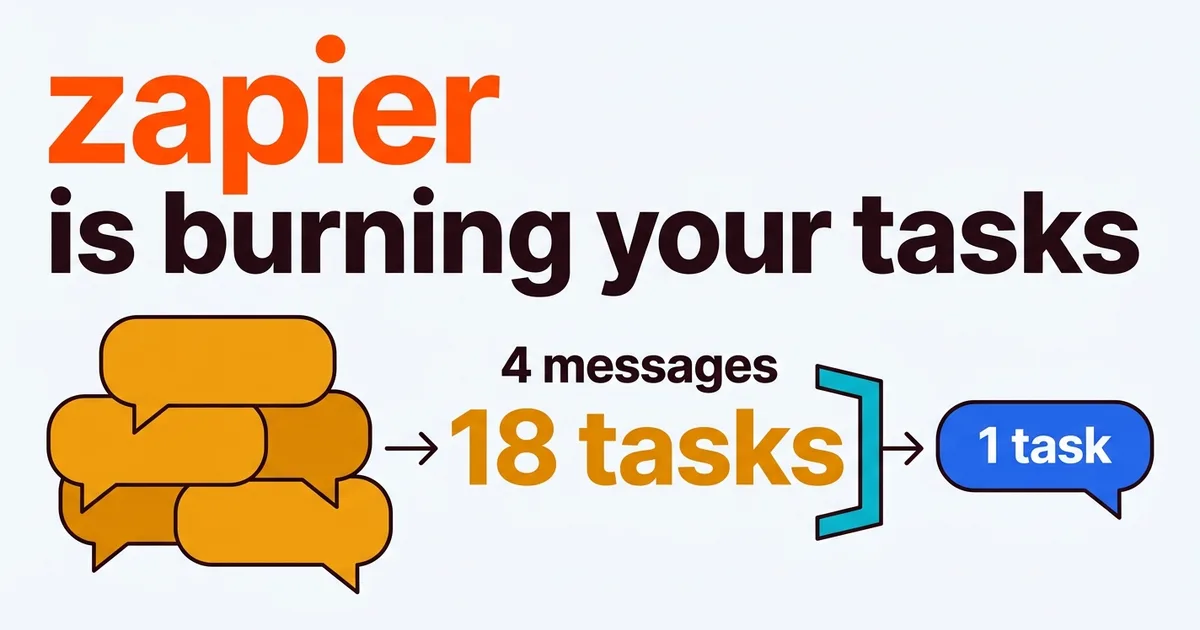
Make.com charges you per operation, and every module in a scenario burns one each time it runs. So when a duplicate or fragmented webhook fires your AI scenario, you don’t pay for one wasted module — you pay for the whole chain, trigger to agent to response. Webhook optimization for Make.com AI scenarios means stopping that waste as early as possible. Here is where to do it and what each option actually saves.
Why duplicate webhooks are expensive in Make
In Make, the price is the operation, not the message. A scenario triggered by a webhook runs every module in its path, and each one is a billed operation. The usual culprits are the same across every channel: duplicates (the sender retries, or the platform delivers the same event twice) and fragments (a user sends “hi”, then “can you”, then “help me cancel” as three messages, each its own run). Two or three operations for one real intent adds up fast when the scenario runs thousands of times a day.
The manual fix (Option 1)
Filter inside the scenario. Add a filter on the connection right after the webhook trigger, or a router that drops anything that isn’t a real, first-time message. Store a hash of recent payloads in a data store and bail out on a repeat. It’s the fastest thing to ship if you already have a scenario, and it does save the expensive part — the AI call never fires on a duplicate.
On a gateway, dedup and merge happen before Make, so no trigger fires and no lookup operations are spent.
How much this actually saves
Concrete beats vague. Say your scenario runs 10,000 times a month with four modules per run — that’s 40,000 operations. If 45% of those runs are duplicates or fragments:
- Fix 1 (inside) removes the three downstream modules on 4,500 runs but still pays the trigger: you save ~13,500 operations.
- Fix 2 (in front) removes all four modules on those 4,500 runs: you save ~18,000 operations.
Same junk, a 33% bigger cut — because the trigger is included.
Place a gateway layer (Option 2) — faster
Put a message gateway between the sender and your Make webhook URL. It deduplicates retries and merges fragmented bursts into one message, then forwards a single clean payload. The scenario fires once per real intent — no wasted trigger, no wasted modules, and a merge window so burst fragments arrive as a single message.
Option 1 (inside) vs Option 2 (in front)
| Filter inside the scenario | Filter in front (gateway) | |
|---|---|---|
| Skips AI / downstream modules on junk | ✓After your filter | ✓Scenario never runs |
| Trigger operation on a duplicate | ✕Still counted | ✓Never fires |
| Extra ops to detect duplicates | ✕Data-store lookups cost ops | ✓Done before Make |
| Merges fragmented messages | ~Hard inside one run | ✓Before forwarding |
| Control of internals | ✓Full | ~Abstracted away |
For the mechanics, see deduplicating webhooks and merging burst messages; for the n8n equivalent, cutting n8n AI agent costs. It’s one piece of message quality for AI agents.
If option 2 sounds more like you, here’s the short version of how to set it up: forward one clean payload to Make →.
Either way — go make your scenario fire once per real intent.
Thanks for reading. 👋
Orlando. -
Orlando Quijada
Technologist with 15+ years of experience. Developer, SaaS tester, and AI collaboration & optimization specialist. Currently contributing at portarus.com.
Written on