Zapier Using Too Many Tasks? Here's How to Fix It, today.
You're paying twice — for extra runs and for multiplied AI steps.
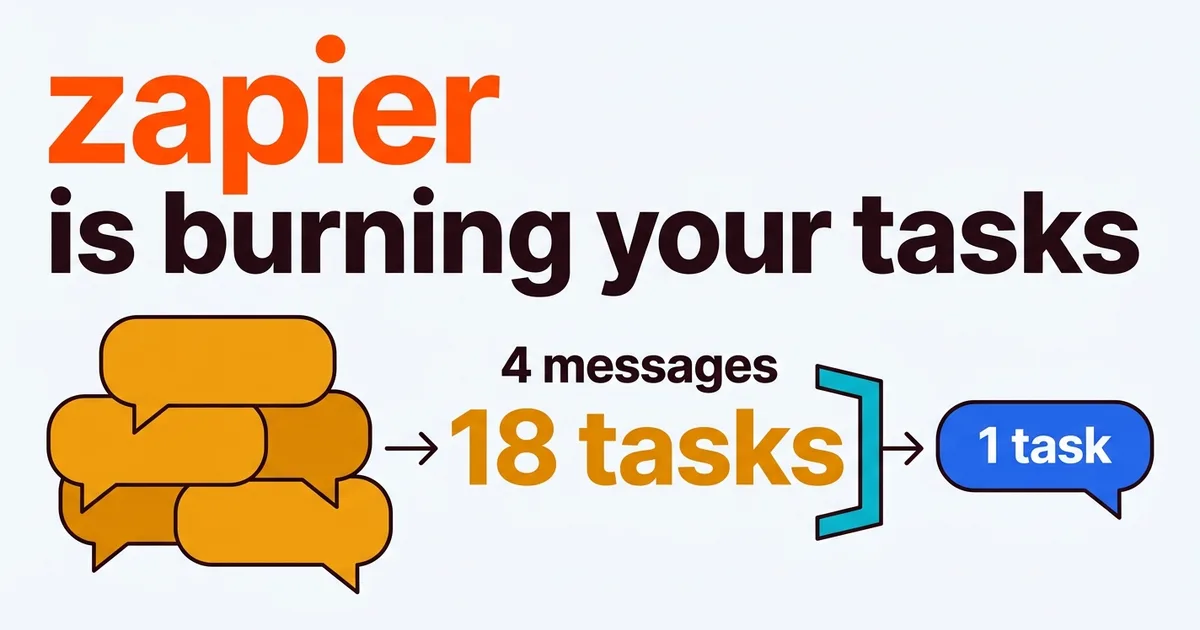
- AI steps are metered by tier: Advanced 3×, Premium 5×, each MCP call 2×.
- A duplicate or burst can cost 10–20× what the real intent is worth.
- A Filter that stops a run before any action counts 0 tasks.
The problem
- Zapier meters usage in tasks, and an AI chatbot is one of the fastest task-burners you can put on a webhook.
- Duplicate and fragmented triggers each fire a full Zap run — "hi / wait / help me" is four runs.
- AI steps carry a multiplier: Advanced 3×, Premium 5×, each MCP call 2×.
The solution
There are two kinds of waste and the fix differs for each:
- Inside the Zap: an early Filter + a cheaper AI tier → a run costs less, but a duplicate still triggered it.
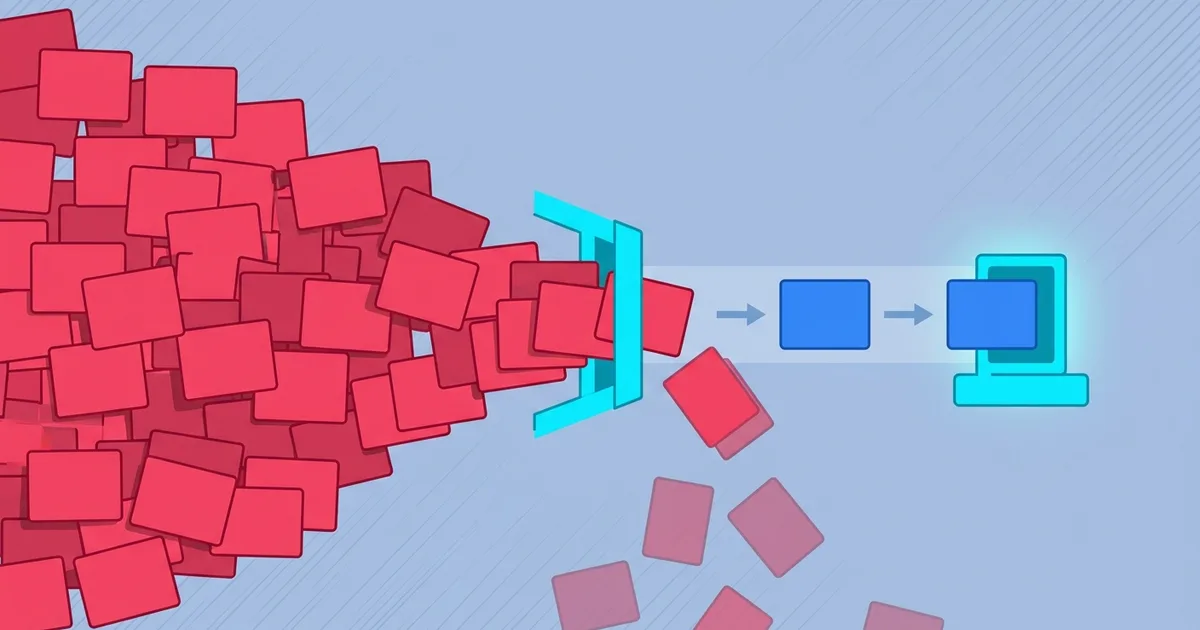
- In front of Zapier: dedup + burst-merge → the extra runs never trigger a task.
A filter that stops a run before any action counts zero tasks — but it can't un-trigger a run a duplicate already started.
Result: Zapier sees one clean request per intent, not the whole noisy burst.
What you’re about to read is probably something Zapier would rather you didn’t know, because its business model runs on you consuming tasks. The faster your Zap fires, the more you pay — and an AI chatbot is one of the fastest task-burners you can put in front of a webhook. The good news: most of that spend is waste you can cut without upgrading your plan. Here are the two ways.
Why your AI chatbot burns Zapier tasks so fast
Zapier meters usage in tasks, and two different things inflate the count:
- Duplicate and fragmented triggers. A user who types “hi”, “wait”, “actually”, “help me with X” fires your webhook four times. Retries and double-sends from WhatsApp, Telegram, or Slack do the same. Each one triggers a full Zap run.
- AI-step multipliers. Standard AI steps count as 1×, Advanced AI as 3×, Premium AI as 5×, and each Zapier MCP tool call counts as 2×. Zapier’s own example: “search and update 10 records” is 11 tool calls — 22 tasks.
The manual fix (Option 1)
Trim tasks inside the Zap. Do this first — it’s free and takes minutes. Inside the Zap you have three levers:
- Filter early. Add a Filter step as the very first action. If the filter stops the Zap before any action runs, no task is counted for that run. Drop empty messages, bot echoes, and known-duplicate payloads here.
- Drop the AI tier where you can. An Advanced AI step is 3 tasks, standard is 1. If the job doesn’t need the bigger model, the multiplier is pure overspend.
- Use Paths, not parallel actions. With Paths, only the actions on the chosen branch count.
On a gateway, the duplicate and the burst never reach the webhook, so no run starts to be trimmed.
How Zapier task counting actually works
Be precise about the mechanic, because it decides every fix above. A task is counted each time a Zap step completes an action successfully — the trigger that starts a run, and each action that runs. Three consequences matter:
- A filter that stops a run before any action counts zero tasks. This is why an early filter is the cheapest lever you have.
- Failed steps generally don’t count, but the trigger that started the run usually already did.
- AI steps are metered by tier, so the same logic costs 1×, 3×, or 5×. See Zapier’s task definition.
The honest takeaway: inside the Zap you can only make a run cheaper. To stop paying for runs that shouldn’t exist, you have to filter before the webhook.
Place a gateway layer (Option 2) — faster
Put a message gateway between the chat channel and your Zapier webhook. It receives the raw messages, cleans them, and forwards one request per real intent — so Zapier never sees the duplicates and never counts a task for them. Two things happen before the webhook fires:
- Deduplication drops repeat sends, so a double-fired WhatsApp message is one run, not two.
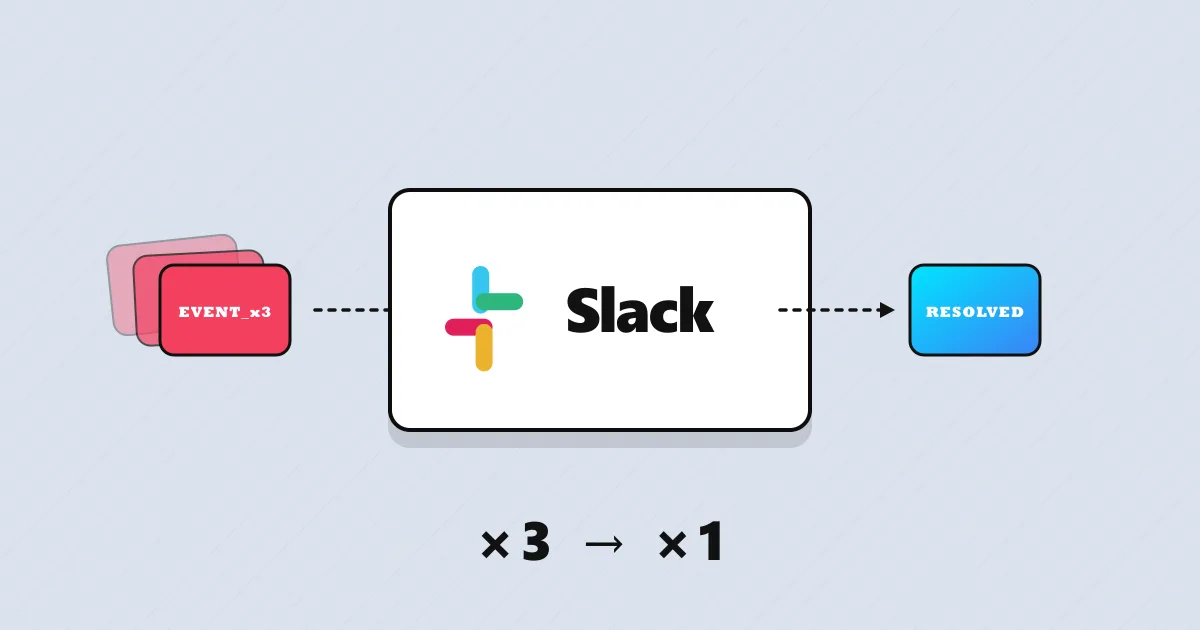
- Message unification merges a burst (“hi” / “wait” / “help me with X”) into a single payload, so four triggers become one.
Because the filtering happens before the trigger, the tasks for those extra runs are never counted. This is the same move that cuts n8n execution costs and reduces Make.com operations; Zapier just calls the billed unit a “task”.
Option 1 (inside) vs Option 2 (in front)
| Filter inside the Zap | Filter in front (gateway) | |
|---|---|---|
| Duplicate / fragmented triggers | ✕Run counted before the filter | ✓Never trigger a run |
| AI-step multipliers | ✓Skip or downgrade the step | ✓Fewer runs, fewer AI steps |
| Setup effort | ✓Minutes, no new tools | ~One URL swap + rules |
| Stops runs that shouldn't exist | ✕No — only cheapens them | ✓Yes |
| Control of internals | ✓Full | ~Abstracted away |
Thinking of just upgrading your plan? You’d be paying for waste — work the ROI of message filtering first. It’s one piece of message quality for AI agents.
If option 2 sounds more like you, here’s the short version of how to set it up: stop duplicate triggers from spending tasks →.
Either way — go make one intent cost one run.
Thanks for reading. 👋
Orlando. -
Orlando Quijada
Technologist with 15+ years of experience. Developer, SaaS tester, and AI collaboration & optimization specialist. Currently contributing at portarus.com.
Written on